Home
Home The Flows
 Our rivers
 About us
 Activity
 Reports
 News & updates
 Links
Links Species
 Support us
 Contact
About the Flows
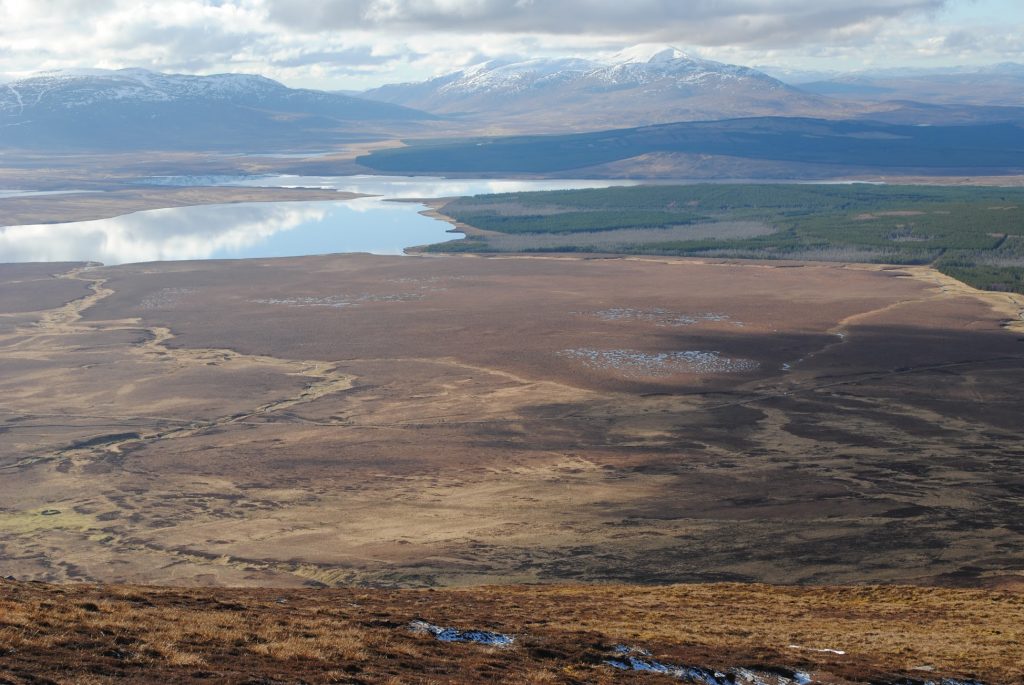
The Flow Country fills the county of Caithness and eastern Sutherland in the far north of Scotland. Covering some 4,000 square kms it is the largest area of blanket bog in Europe. It is scheduled for nomination as a UNESCO World Heritage site in respect of its remote, natural landscape. The area is also a hub for the renewables industry, drawn by the favourable climatic conditions for wind energy and the potential for marine renewable sources of energy from its shores.

Geologically speaking the Flows consist of a largely flat expanse of peat, often to a great depth, laid over Caithness sandstone merging with granite and then gneiss in eastern Sutherland (see map). The result is mile after mile of rough, wet, awkward land studded with small lochs and often lacking a clear indication of the natural fall of the land. The Wick river, for instance, drops only 100m between its source and where it enters the sea, a distance of 40 km. Its gradient from Watten to the ocean is 1 in 800. Because of the underlying platform of rock and the flatness of the terrain, drainage is poor and the water table high. This is the essential character of the Flow Country.
On the coastal margins of both Caithness and Sutherland there are stunning beaches and cliffscapes, which are host to a tumult of nesting sea birds. In the summer breeding season the Flow Country itself supports a wide range of migratory birds, many of which are not commonly seen.
In all, the area within the remit of the Trust covers several hundred kilometers of coastline, thirteen salmon rivers, hundreds of brown trout lochs, including the famous Loch Watten, plus colonies of Arctic charr and freshwater pearl mussels of international significance. Despite the various encroachments of mankind, the Flow Country remains one of the most pristine areas of Britain.
The blanket bog

Blanket bog develops over long periods of time in low gradient landscapes where wet and cool conditions impede the decomposition of vegetation. The resulting layer of partially decomposed mosses and grasses builds up slowly. The Flow Country blanket bog has been accumulating peat for several thousand years now and in many places the resulting deposits are several meters deep.
In recent decades the advent of global climate change has been widely recognised. Now, when even the voices of the most diehard contrarians seem to have faded, determined efforts are working to limit the environmental repercussions of carbon emissions caused by past reliance on fossil fuels. The Flow Country has an important role to play in this. It is estimated that the peatlands hold 400 million tonnes of carbon, equivalent to around 100 years’ worth of UK fossil fuel emissions. The carbon – originally atmospheric carbon dioxide gas – was incorporated by living plants into cellulose and other carbon-rich materials. Now, this same carbon is harmlessly sequestered in the dead plant material that forms the peat. Where the bogs are in good ecological condition carbon dioxide gas continues to be trapped in this way and safely stored away.
The Flow Country peatlands and the streams and rivers that arise there are intimately linked. The peatlands contain such large amounts of water that they moderate and stabilise the flow rates, the temperature and the chemistry of the streams draining them, to the benefit of the organisms living there.
Encroachments
Whatever mankind does in the Flows has a profound effect on its ecology and river systems. Progress has brought with it changes over the centuries, but the most intrusive developments have occurred within the last 50 years.
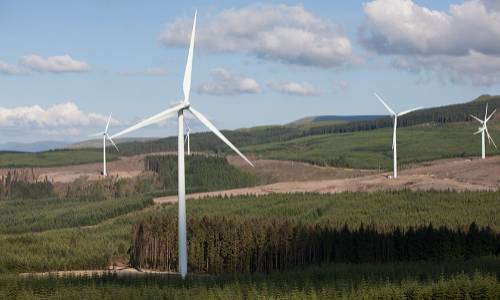
Forestry: since the 1970s a large area of the Flow Country has been modified by intensive commercial forestry. Ploughing, draining and planting the deep peat of the Flows has done immense damage to the blanket bog. The logistics of felling and moving large quantities of timber and partial replanting presents a major challenge for the damage wrought in the past to be repaired.
Wind farms: since 2000 wind farms, whilst intended to reduce carbon emissions, have become the major encroachment on the peatlands. The conditions are highly favorable to developers: not only are the average annual wind speeds in the area among the highest in Europe but the blow is clean, being unimpeded by natural features. Wind farms involve excavation of the peat for the construction of concrete turbine bases, metalled roads and bridges. In the Flows, each turbine base displaces about 5,000 tons of peat. In the dry, breezy conditions of summer, peat becomes friable and unless handled carefully is liable to end up as sediment in the local watercourses. There is no cap on the number of turbines which may be accommodated and planning approval for further developments continues to be granted.
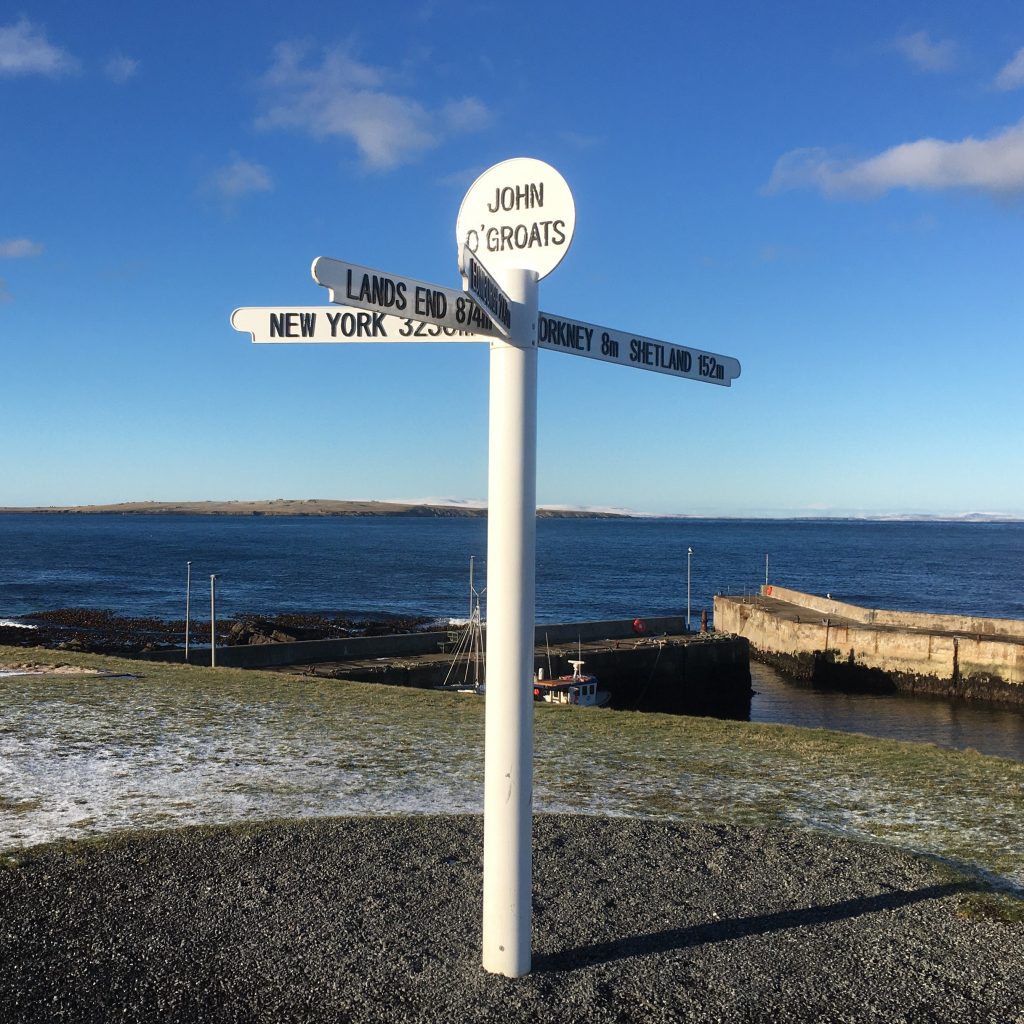
Tourism: within the last few years tourism has increased massively with the popularity of staycations and promotion of the North Coast 500 route. The proposed bid for UNESCO heritage status for the Flow Country is already drawing visitors to the area and brings the prospect of many more in the event of being successful. There is no infrastructure for visitors en masse to the peatlands, and the lure of the wilderness and wild camping is open to abuse. Whilst providing a welcome boost to the local economy, good planning and sensitive management will be required to safeguard the fragile landscape and aquatic environment.
The Flow Country project
The past decade has brought official recognition of the Flow Country in the fight against climate change and for its biodiversity. The Peatland Partnership was set up to bring together diverse organisations in a concerted drive to protect the natural environment over the long term and, where possible, to reverse any damage done. There is a dedicated Flow Country website which provides extensive information on the area and details coordinated plans to nurture the peatlands as well as to promote their existence. The Flow Country Rivers Trust is intrinsically involved in this project.
Peatland restoration now being undertaken in the Flow Country aims to ensure that the sequestered carbon stays where it is and that the capacity of the peatlands to capture carbon is maintained and improved. More generally, peatland restoration will ensure that the Flow Country, together with the terrestrial and aquatic ecosystems that it supports, is restored towards its original, pristine condition. Rivers and streams will be among the beneficiaries of this remedial work.
The rivers
Whilst the state of the blanket bog is fundamental to the survival of the organisms within its waters it is by no means the only threat to their well-being. Climate change is almost certainly impacting on river habitat, both directly and indirectly. The rise in water temperatures and the deployment of offshore installations to generate electricity are two areas of particular concern with regard to the sustainability of some fish species: both aspects have yet to be fully assessed and are high on the Trust’s list of priorities.
Global warming: changes in regional and local weather patterns resulting from global heating and global climate change will not always be gradual or uniform, nor will they be evenly spread across the globe. Even on a Scottish scale, data obtained from the Scottish River Temperature Monitoring Network shows that increases in river temperature due to global warming will be uneven; the data also shows that the Flow Country rivers are among those most at risk.
Young fish evidently have physiological and behavioural defences that they can deploy for a short time to counter the potentially harmful effects of the extreme temperatures they experienced, for example, in 2018. This is, at least, reassuring but it does not guarantee their well-being in years to come if summers like 2018 recur more frequently in future or if warmer conditions become the norm. There are few viable options for mitigating the effects of climate change on the Flow Country rivers but maintaining and improving the condition of the peatlands is an obvious candidate.
Salmon and sea trout begin to run into trouble when water temperatures reach about 20°C. Within the last decade, 2013, 2018 and 2020 were years of prolonged summer drought and in 2018, especially, low water conditions were associated with extreme water temperatures. Loggers installed in the River Thurso showed that water temperature approached, and sometimes exceeded, 25°C on many days in mid- and late summer. Despite this, electric-fishing surveys showed that stream populations of juvenile fish were not obviously affected by these conditions – perhaps because the very highest water temperatures tended to prevail for only a few hours of the day in late afternoon.
Marine renewable energy: around the shores of the Flow Country the advent of renewable energy sources poses a threat to migratory fish leaving and returning to their home rivers from the Atlantic Ocean. We know little of how these species take their bearings but the generating mechanism of offshore installations has the potential to disorientate fish and possibly inflict damage.

The Beatrice offshore wind farm on the east coast, operational since 2019, comprises 84 wind turbines, and hundreds more are planned throughout the Moray Firth and off the north coast. In the sound between Caithness and the island of Stroma a cluster of prototype underwater turbines are generating electricity by exploiting the tidal race between the Atlantic and the North Sea. A number of similar projects are planned within the environs of the Pentland Firth off Caithness and Orkney. Further along the north coast, off Dounreay, another venture involves wind turbines atop a floating platform. The effect of these underwater and offshore turbines on fish species has yet to be determined.
How can we help?
The physical, chemical and biological characteristics of all the Flow Country rivers reflect their origins in the peatlands and the peatlands are therefore strongly linked to the Trust’s core interests in the freshwater environment and freshwater ecology. Equally, the rivers and their varying ecologies link the various components of the peatlands. By working with others the Trust is endeavouring to make a positive, specialist contribution to the future of the Flow Country.